Back to News
Planning & Building Control
Council raises major concerns over impacts of 184km pylons scheme on Tendring district
*
Tendring District Council (TDC) has raised serious concerns over National Grid’s plans for a 184km, 400 kilovolt (kV) electricity transmission line between Norwich and Tilbury, which would cut through the north Essex countryside.
The scheme - part of the £30billion Great Grid Upgrade - was submitted to the Planning Inspectorate in August 2025.
As part of the examination process, TDC has submitted a comprehensive Local Impact Report (LIR) to the Planning Inspectorate, setting out the wide ranging effects the project would have on the district and calling for substantial additional mitigation before it can be considered acceptable.
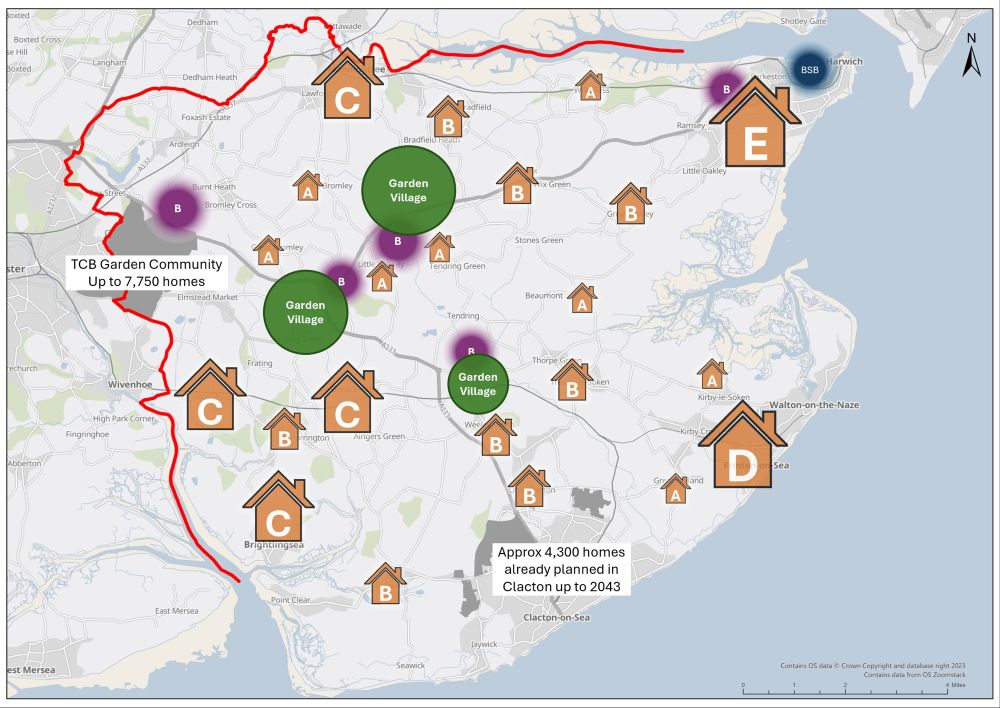
A key concern is the selection of the East Anglia Connection Node (EACN) and associated corridors, which the council says would place a disproportionate concentration of major energy infrastructure in the Ardleigh and Little Bromley area, including directly across the district’s only block of high grade agricultural land.
The report concludes that, in its current form, the project would result in significant and unresolved harms to communities, the environment, local businesses and the rural economy.
It also highlights a lack of clear commitments from the applicant on skills and employment, insufficient mitigation for landscape and ecological impacts, and inadequate assurances about construction effects on rural roads and nearby homes.
Councillor Andy Baker, TDC’s Cabinet Member for Housing and Planning, said the council cannot support the scheme as it stands.
He said: “Tendring District Council fully recognises the national need for new green energy infrastructure. However, our Local Impact Report sets out in clear terms that the Norwich to Tilbury proposals — as currently designed — raise serious and unresolved concerns.
“Site selection for the EACN and its corridors is flawed, placing a heavy concentration of major energy infrastructure in the Ardleigh–Little Bromley area and directly on high grade agricultural land.
“Wide ranging impacts also remain inadequately mitigated, including landscape, heritage, hydrological, agricultural, traffic, community wellbeing and cumulative effects – we do not believe the project’s benefits outweigh the harm that it would cause.”
TDC councillors previously voted unanimously in favour of a motion warning that the pylons could have a “potentially devastating effect” on the district.
This followed the council reiterating its “strong opposition” to the current proposals during National Grid’s statutory consultation, with councillors expressing frustration that only one option had been presented. They called for viable alternatives - including offshore routes - to be fully explored.
TDC will continue to engage fully throughout the ongoing examination process and will submit further evidence as required. A decision on the Development Consent Order is expected in early 2027. Should consent be granted, construction could begin in 2027, with the new transmission line anticipated to be fully operational by 2031.
TDC’s full Local Impact Report is available on the Planning Inspectorate website here.
Image credit: National Grid